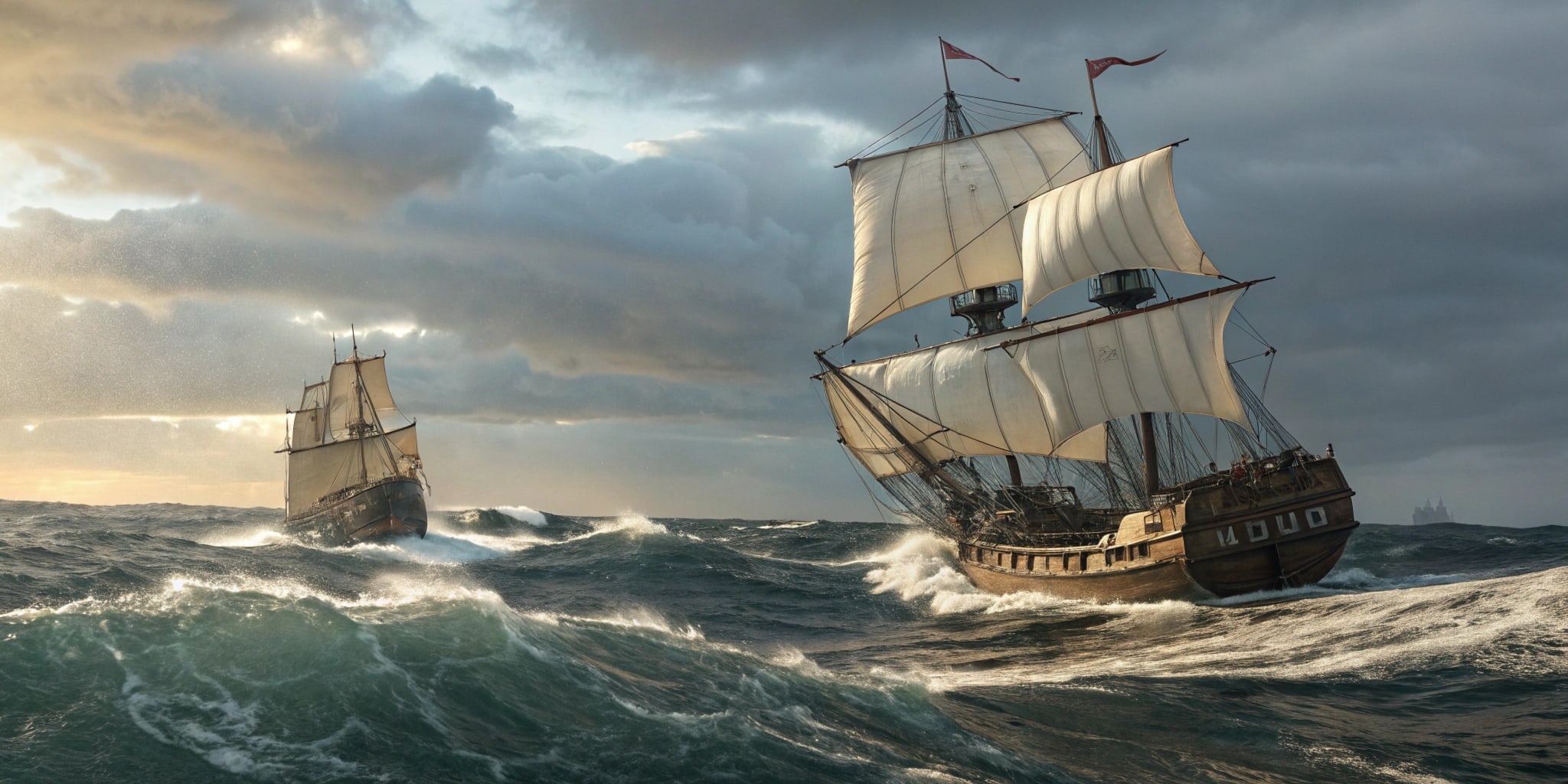
American Puritans
Q: Would you agree this is factually correct? "In summary, the 1620 migration happened because the Puritans could not tolerate the Church of England's practices, not because they were being targeted for oppression."
Yes, this statement is largely correct. The 1620 migration of the Pilgrims (a specific group of Separatists) happened because they believed the Church of England's practices were too similar to Catholicism and could not, in good conscience, conform to them. They sought religious freedom to practice their beliefs in a purer form, which they felt was impossible under the Church of England. While they faced social and economic pressures for their dissent, they were not uniquely targeted for oppression compared to other nonconformist groups.
Q: Who were the leaders of the Puritan's migration?
The key leaders of the Puritan migration included figures such as William Brewster, William Bradford, John Winthrop, and Thomas Dudley. These individuals played significant roles in organising and guiding the migration, whether it was the Pilgrims' journey aboard the Mayflower in 1620 or the later Puritan migrations in the 1630s that established the Massachusetts Bay Colony.
Q: Were any of the four you named arrested for their beliefs?
Yes, William Brewster faced arrest for his beliefs. While living in Leiden, Netherlands, he published religious pamphlets critical of the Church of England, which led King James I to pressure Dutch authorities to arrest him. Although Brewster evaded capture by going into hiding, the authorities raided his printing press and shut it down in 1619. The others, like William Bradford, John Winthrop, and Thomas Dudley, do not appear to have been arrested but were deeply involved in efforts to escape religious conformity imposed by the Church of England.
Q: Did Brewster get into legal difficulty in the Netherlands?
Yes, William Brewster did face legal difficulties in the Netherlands. While living in Leiden with the Separatist community, Brewster began publishing religious pamphlets that were critical of the Church of England. These pamphlets were printed in secret and smuggled into England, which angered English authorities. King James I pressured Dutch officials to arrest Brewster. Though Brewster went into hiding and evaded capture, the Dutch authorities raided the printing press and shut it down in 1619.
Q: Why do some Americans call these pilgrims 'founding fathers' because there were colonies already on the American East Coast?
Although there were earlier colonies like Jamestown (1607), the Pilgrims are often called "founding fathers" because of the unique role they played in shaping the cultural and ideological identity of what would become the United States. Their 1620 settlement at Plymouth and the Mayflower Compact they signed established principles of self-governance and community responsibility. These ideals later influenced the development of American democracy. Additionally, Thanksgiving—a widely celebrated national holiday—ties directly to their story, further cementing their legacy in American culture.
Q: How did Chief Massasoit die?
Chief Massasoit died around 1661, likely from natural causes such as aging or illness. By that time, he was an elder, having lived an exceptionally long life for his era (possibly around 80 years old). While there are no records of violence or sudden catastrophic events surrounding his death, his passing marked the end of a significant era of peace between the Wampanoag and the English settlers, which he had worked hard to maintain during his lifetime.
I've heard a lot of people say this and I was sceptical but in the end it really does look like a LOT of American's don't actually know their own history.